
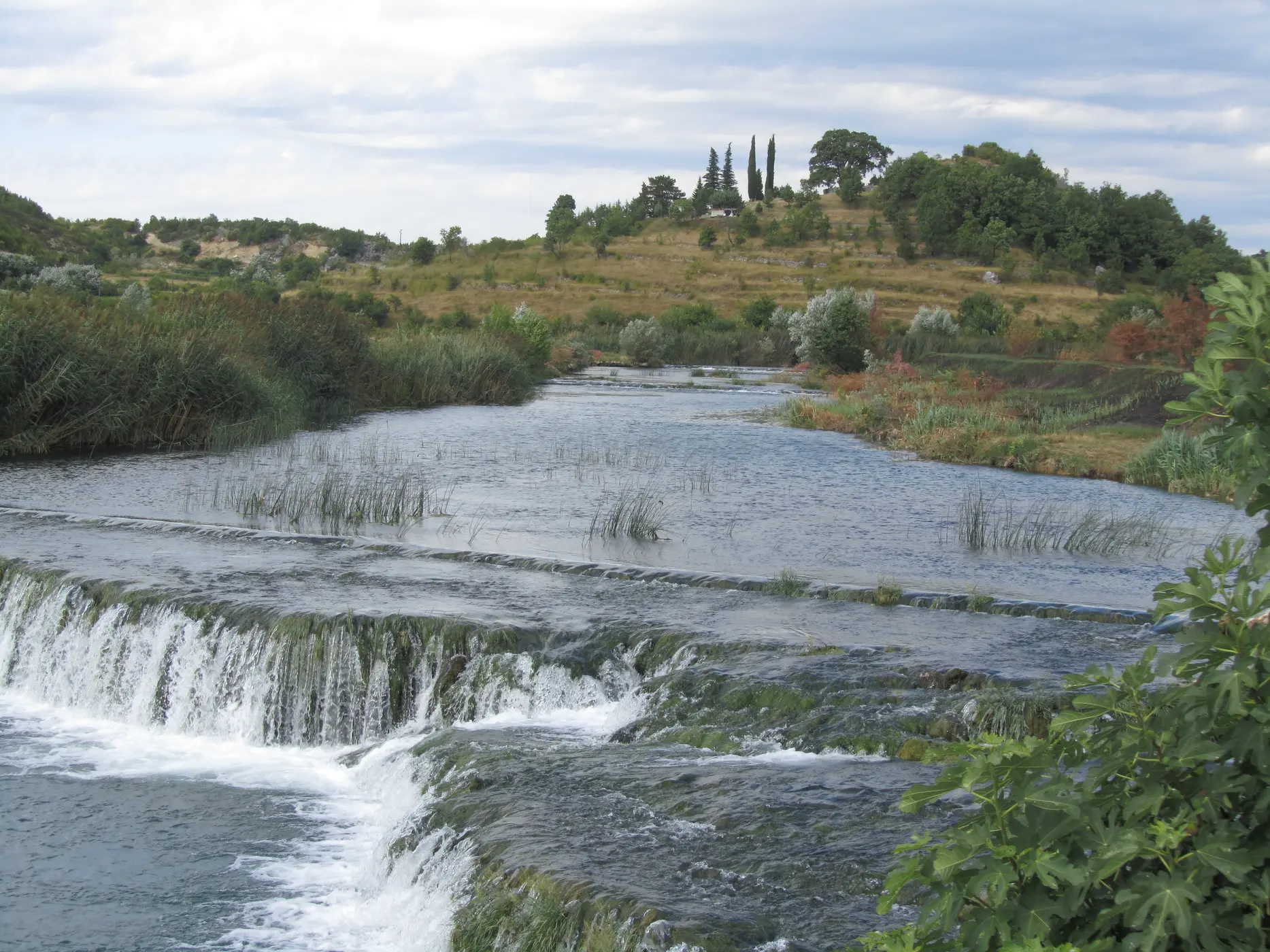
Summer in Mostar is hot enough to change the whole shape of a day. Sightseeing works best early; by afternoon, many travellers want shade, cold water and a place to sit without crossing another stone square.
Kravica is the famous answer, but it is not the only one. The Trebižat, Buna and Drežanka offer different experiences—from organised visitor areas to simple local riverbanks. Conditions change after rain and through the season, so today’s water matters more than an old photograph.
Choose the right water
Five different summer experiences
- Kravica: dramatic waterfalls, facilities and the largest visitor numbers.
- Koćuša: a smaller Trebižat waterfall and a calmer short stop.
- Buna: extremely cold spring-fed water, better for brief dips and riverside meals.
- Drežanka: clear mountain-river swimming with simple access points and few facilities.
- Quiet Trebižat stretches: best with a local host who knows access, shade and current conditions.
The famous choice
Swimming at Kravica Waterfalls
Kravica is the easiest place to understand before arrival: there is an organised entrance, paths, seasonal hospitality and a wide waterfall basin. The official visitor page publishes current rules, hours and prices; check Kravica visitor information shortly before travelling.
Arrive early in high summer for easier parking and more room near the water. Rocks can be slippery and water depth changes, so follow on-site signs and staff instructions. Our Mostar to Kravica guide covers transport and practical timing.
Colder and simpler
Buna and Drežanka
Buna
The water emerging at Blagaj is cold even in midsummer. Riverside restaurants and shade make the area excellent for cooling down, but not every bank is an official bathing place. Use established access, never jump into unknown water and expect a very short swim.
Drežanka
The mountain river north of Mostar has clear pools used locally in summer. Access and facilities vary, and water can rise after rain in the catchment. The regional listing for the Drežanka swimming area is a useful orientation, not a live safety guarantee.
Slow afternoon
A quieter side of the Trebižat
The Trebižat is more than its major waterfalls. Quieter stretches can offer shade, pebbled banks and space for a picnic, but access is often informal and difficult to identify from a map.
A local visit works best when someone has checked the day’s conditions, knows where a small vehicle can stop and brings what the riverbank lacks. Natura Tours’ river picnic and swim experience is designed for a small group rather than a crowded attraction.
Cold water is still moving water
What to check before swimming
- Never enter during visibly high, muddy or fast water.
- Ask locally after heavy rain, even if the sky above you is clear.
- Do not dive or jump where you cannot see the bottom.
- Wear water shoes on slippery rock and uneven pebbles.
- Keep children within arm’s reach; river current changes over short distances.
- Use reef-safe sun protection and take all rubbish away.
Remote river spots may have no lifeguard, toilet, shop or reliable phone signal. If unsure, choose an organised visitor area and follow posted instructions.
A cooler Mostar day
How to plan transport and timing
Without a car, Kravica and smaller river sites require more planning than a city pool. Taxis can reach known entrances but may not wait, and informal river access can be hard to describe. Arrange the return before entering an area with weak signal.
Leave Mostar after an early old-town walk, reach the river before the strongest heat, carry drinking water and a dry layer, and avoid fixing a flight or bus immediately after the outing.
Quick answers
Before you go
Can you swim at Kravica?
Swimming access depends on current on-site rules and water conditions. Check the official visitor information and follow signs and staff instructions on arrival.
Which river near Mostar is warmest?
Temperatures vary, but the spring-fed Buna and mountain-fed Drežanka are notably cold. The Trebižat often suits a longer summer swim.
Do quiet river spots have facilities?
Often not. Many have no lifeguard, toilet, shop or formal parking, which is why local knowledge and preparation matter.